
By Frank Wenzel, Regulated Canadian Immigration Consultant (RCIC R709441).
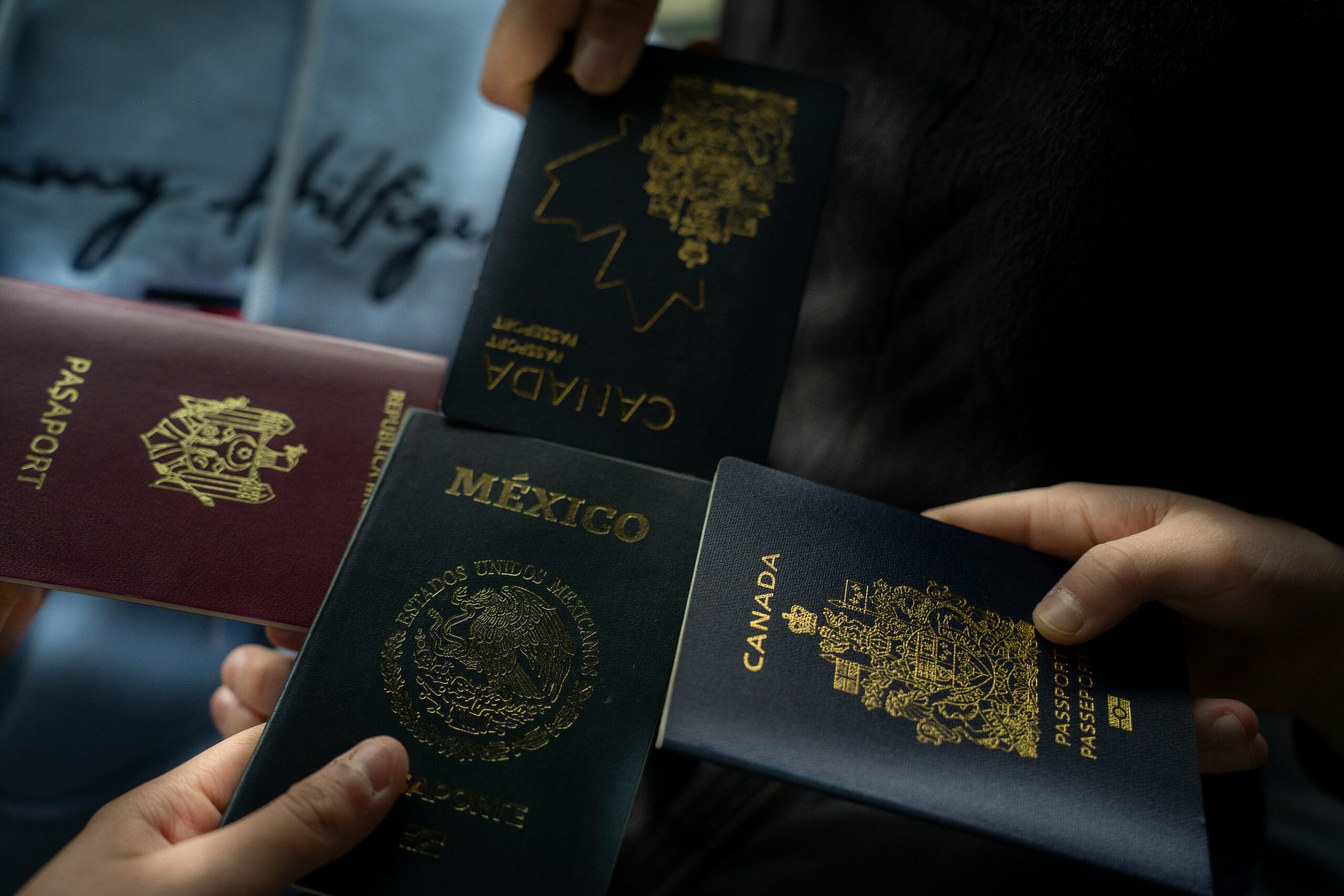
To work in Canada as a Mexican citizen, you need a job offer from a Canadian employer and a work permit. The advantage for Mexicans is that under CUSMA (called T-MEC in Spanish), some positions can get the permit faster and cheaper. The process can take a couple of days because the LMIA is avoided. You also need a visa or an eTA to enter Canada.
Can I work in Canada with an eTA or a tourist visa?
No. An eTA is for visits, business, tourism or transit. If the government believes the real purpose of your trip is to work, they may decide you are not a genuine visitor and refuse you entry. The work permit comes first.
Do I need a job offer?
Yes. There are two main paths:
- Work permit with an LMIA. An LMIA (Labour Market Impact Assessment) is issued by the Government of Canada and may be required before you can get your permit. Your employer applies for it before you do.
- CUSMA work permit. This is one of the exemptions from the LMIA under an international agreement, CUSMA (T-MEC in Spanish). It is the faster and cheaper route, but it only works if your position and your profile fit one of its categories.
How much does it cost and how long does it take? CUSMA work permit vs. LMIA
The difference is in the step your employer has to complete first.
| Item | With an LMIA | With a CUSMA work permit |
|---|---|---|
| Application and processing time, etc. | LMIA: 2 to 3 months, plus 3 weeks for the work permit | 1-2 days |
| Cost to the employer | $1,000 CAD per position | $230 CAD employer compliance fee (some exemptions apply) |
| Your work permit | $155 CAD | $155 CAD |
| Biometrics (per person) | $85 CAD | $85 CAD |
Faster. An LMIA takes roughly 2 to 3 months, plus the time to approve the work permit.
A CUSMA work permit takes a couple of days.
Cheaper. For an LMIA, the employer pays $1,000 per position. For a CUSMA permit, the compliance fee is $230. The general difference is $770 per worker for your employer. Your own permit costs the same on both paths: $155 plus $85 for biometrics. An employer who saves time and money has more reasons to say yes to your application.
One condition. The CUSMA permit is not for every job: the position must fit one of its categories. If it does not, the path is the LMIA. Also, only the employer pays for the LMIA; nobody should ask you for money for it.
What is the CUSMA (T-MEC) work permit for Mexicans?
CUSMA (T-MEC in Spanish) is the trade agreement between Canada, the United States and Mexico. Mexico is among the countries whose citizens can work in Canada under a free trade agreement, and CUSMA is one of them.
The three categories. IRCC recognizes traders or investors, intra-company transferees and professionals under CUSMA. Your position, your education and your relationship with the company must fit one of them. The most common mistake: having a job offer is not enough; the offer has to match the category.
Which professions qualify as “professional”? These are some of the most common professions on the CUSMA list. The first ten generally do not require registration or professional certification in Canada; the last two do:
- Computer systems analyst. Technology jobs such as software or web developer often fit here, depending on the actual duties of the position. A university degree is required, or a two-year diploma or certificate plus three years of experience.
- Graphic designer. A university degree, or a two-year diploma or certificate plus three years of experience.
- Management consultant. A university degree, or documented equivalent professional experience of five years.
- Economist. A university degree.
- Hotel manager. A degree in hotel or restaurant management, or a diploma or certificate in that field plus three years of experience.
- Industrial designer. A university degree, or a two-year diploma or certificate plus three years of experience.
- Interior designer. A university degree, or a two-year diploma or certificate plus three years of experience.
- Research assistant at a university. A university degree.
- Mathematician or statistician. A university degree.
- University professor. A university degree.
- Registered nurse (licence required). The agreement asks for a government-issued licence or a bachelor’s-level degree. In Canada, nursing is a regulated profession, so to practise you need to register with the nursing college of the province.
- Dentist (licence required). The agreement asks for a dental degree or a government-issued licence. To practise in Canada you need the licence of the province where you work.
Other professions on the list, such as engineer or accountant, also qualify for the permit, but in Canada they are regulated professions. If your job involves practising as an engineer or doing reserved accounting work, you need the registration of the provincial professional association in addition to the permit. Being on the list does not mean your specific position qualifies, so confirm it before accepting an offer.
How it works.
- Your employer submits the offer through the Employer Portal and pays the fee before you apply; otherwise the permit is refused.
- With the offer number, you apply for your permit online.
- If you are already in Canada as a visitor, a Mexican citizen can apply for a work permit under any CUSMA category.
General requirements. You must convince an officer that you will leave Canada when your employment ends and show that you have enough money to support yourself and your family and to return home. You can be refused for medical inadmissibility, a criminal record, a security risk, or for giving false information in your application. Declaring everything truthfully is what best protects your application.
Do I need a visa or an eTA to enter Canada?
It depends. Since February 29, 2024, Mexicans who travel by air can apply for an eTA only if they hold a valid U.S. nonimmigrant visa or have held a Canadian visa in the last 10 years. Anyone who does not meet this needs a visitor visa. Confirm it on the official IRCC page.
Can you apply for the permit directly at the airport? To apply at a port of entry, IRCC requires you to be from a visa-exempt country or a visa-exempt traveller. Mexico requires a visa, so the prudent course is to apply for the permit before you travel. This is an important difference compared with U.S. professionals.
Steps to work in Canada as a Mexican citizen
- Get a formal job offer from a Canadian employer.
- Check whether your position fits the CUSMA work permit; if not, your employer applies for an LMIA.
- On the CUSMA path, your employer submits the offer through the Employer Portal and pays the fee before you apply.
- Apply for your permit online and give your fingerprints (biometrics).
- Check whether you need a visitor visa or an eTA to travel.
- Travel with your introduction letter and a valid passport.
How do I avoid fraud when looking for work in Canada?
There are many fake offers from “companies that give you a work permit.” Nobody can sell you a permit: IRCC approves it. The company pays for the LMIA; the government does not allow the worker to pay it. Be wary of anyone who asks you for money for a “job guarantee.” Before hiring an adviser, confirm that they are a licensed consultant in the College of Immigration and Citizenship Consultants (CICC) register.
About the author, and a book for your partner or colleagues in the U.S.
I was born in Mexico and came to Canada as a teenager. Today I run my immigration practice in Vancouver and I am writing How to Move from the U.S. to Canada (2026/2027 edition), a guide in English for Americans. It covers CUSMA permits for U.S. professionals and how to apply for them at the border, plus permanent residence, taxes and your first seven days in Canada. If your partner, employer or colleagues live in the U.S. and want to move with you, they can join the waiting list at movingtocanadaguide.com. The book is coming soon on Kindle.
Want to know if your position qualifies for the CUSMA work permit?
Your profession, your offer and your travel history change the path. Book a consultation and we will review your situation.
This article is general information, not legal advice, and does not guarantee results. Rules and fees change; verify at canada.ca.
Frequently asked questions
1. Can I work in Canada with an eTA?
No.
2. Do I need a job offer?
Yes.
3. What is the CUSMA work permit?
A work permit exempt from the LMIA for categories under the agreement.
4. Is it faster and cheaper than a permit with an LMIA?
Yes, for your employer: there is no LMIA and the fee is $230 instead of $1,000.
5. Does it work for any job?
No; the position must fit a category.
6. How much does my permit cost?
$155 base plus $85 for biometrics.
7. Can I apply at the airport?
The prudent course is to apply before you travel.




Leave a Reply
Your email is safe with us.